
Heart Artery Blockage: What Is the Difference Between LAD, Left Main, RCA and LCX?

Heart Artery Blockage: Types, Dangerous Locations, & Symptoms
The human heart depends on a continuous supply of oxygen-rich blood to function properly. This blood reaches the heart muscle through coronary arteries. When fatty deposits, cholesterol and plaque build up inside these arteries, they can narrow the blood vessels and restrict blood flow. This condition is commonly known as heart artery blockage.
According to the public-awareness approach of Top Heart Specialist in Indore, Dr. Sudhanshu J. Agnihotri, understanding your angiography report is just as important as knowing the blockage percentage. Let’s understand the four major coronary arteries and why their location matters.
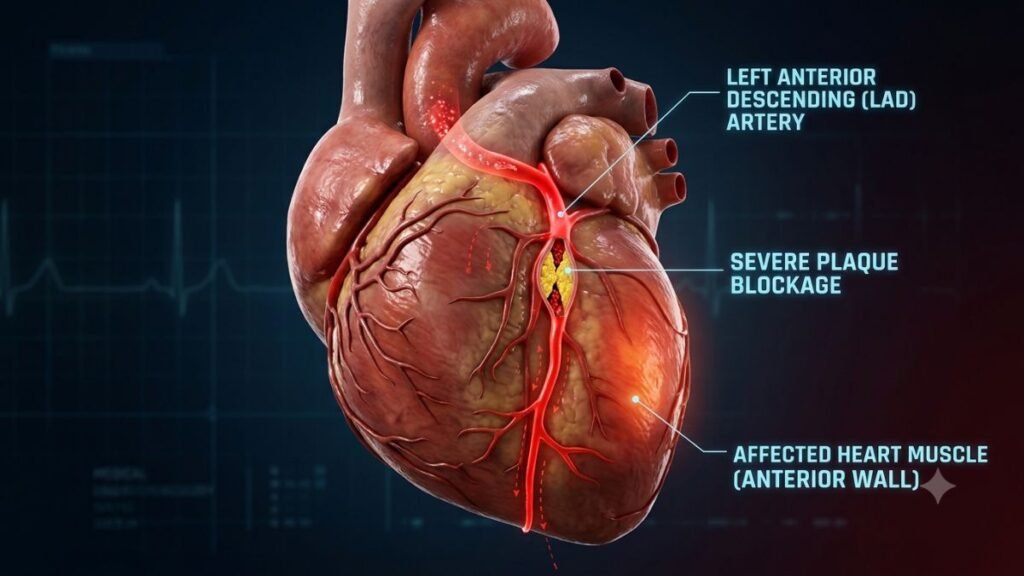
1. LAD Blockage: Why Is It Called the Widow Maker?
LAD stands for Left Anterior Descending Artery. It is one of the most important coronary arteries because it supplies blood to the front wall and a major portion of the heart muscle, including an important part of the left ventricle.
A severe blockage in the LAD, particularly near its beginning, can affect a large area of the heart. This is why a critical LAD blockage is commonly associated with the term Widow Maker. It may cause a major heart attack and significantly affect the heart’s pumping function.
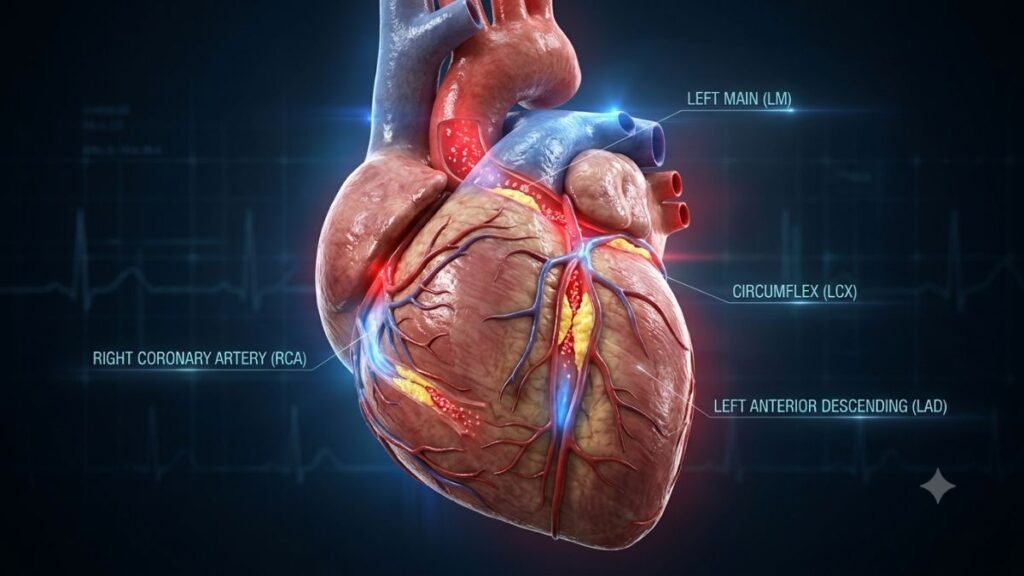
2. Left Main Blockage: The Main Blood Supply Route
The Left Main Coronary Artery is often called the mother artery because it divides into two major branches: the LAD and LCX.
These arteries supply blood to a large portion of the heart. Therefore, significant Left Main blockage can put an extensive area of the heart muscle at risk.
A serious blockage in this artery requires careful medical evaluation because it can have major consequences for heart function.
3. RCA Blockage: More Than Just Blood Supply
RCA stands for Right Coronary Artery. It generally supplies blood to the right side of the heart and, depending on a person’s coronary anatomy, may also supply parts of the lower heart wall.
An important function of the RCA is supplying blood to certain components of the heart’s electrical conduction system, which helps regulate the heartbeat.
Therefore, an RCA blockage may sometimes lead to a slow heart rate or rhythm disturbances, particularly when blood flow to these electrical pathways is affected.
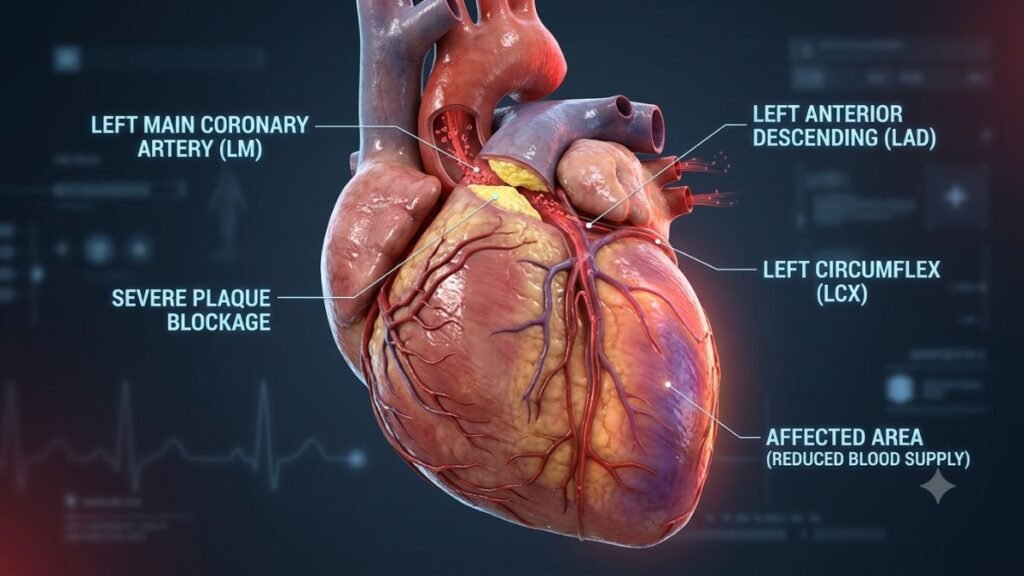
4. LCX Blockage: Understanding Its Importance
LCX stands for Left Circumflex Artery. It supplies blood to the left lateral and, in some people, the back portion of the heart.
The area supplied by this artery varies from person to person. Sometimes, symptoms of LCX-related problems may be less obvious or difficult to recognise. This can delay diagnosis.
However, a blockage in the LCX should never be ignored. Its seriousness depends on the location of the blockage, the amount of blood flow affected and the area of the heart supplied by the artery.
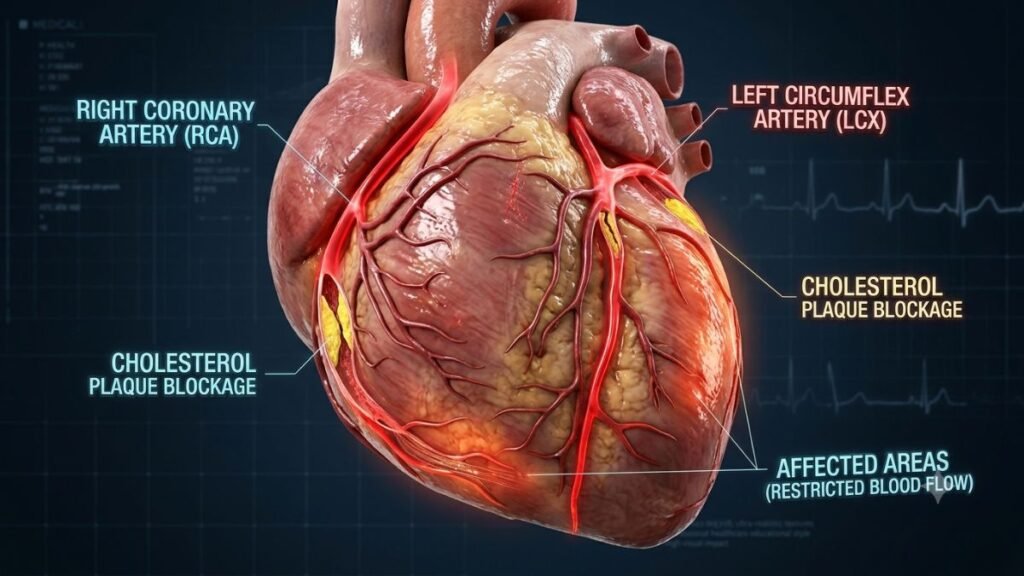
Why Is the Location of a Blockage More Important Than Its Percentage?
One of the biggest mistakes people make after an angiography is focusing only on the blockage percentage. For example, 70% blockage in the Left Main Artery and 70% blockage in a smaller branch are not necessarily equally dangerous.
The risk of heart artery blockage depends on several factors:
- Location of blockage: Which artery is affected, and whether the blockage is near its beginning or in a smaller branch.
- Area at risk: How much heart muscle depends on that artery for its blood supply.
- Collateral circulation: Whether alternative small blood vessels have developed to provide additional blood flow.
- TIMI Flow: This grading system helps doctors assess how effectively blood flows through a coronary artery.
- Heart pumping function: Whether the blockage has affected the heart’s ability to pump blood.
Collateral circulation may provide some alternative blood supply, but it does not guarantee protection from a heart attack.
As Top Heart Specialist in Indore, Dr. Sudhanshu J. Agnihotri emphasises, understanding the complete angiography report is essential. A blockage percentage alone cannot determine the treatment required for a patient.

Can Every Heart Blockage Be Treated With Angioplasty?
No. Treatment depends on the patient’s overall condition, symptoms, artery anatomy, number of affected vessels, heart function and other medical factors.
Depending on the findings, treatment may include:
- Medicines and lifestyle modifications.
- Angioplasty with stent placement.
- Coronary artery bypass surgery (CABG).
A heart specialist evaluates these factors before recommending the most appropriate treatment for heart artery blockage.
Frequently Asked Questions (FAQs)
1. Which heart artery blockage is considered the most dangerous?
Severe Left Main or proximal LAD blockage can be particularly dangerous because these arteries supply a large area of the heart.
2. Is 70% heart blockage dangerous?
It can be significant, but the risk depends on the affected artery, blockage location, symptoms and blood flow.
3. Can a person have a heart attack without experiencing symptoms?
Yes. Some people experience a silent heart attack with mild or unrecognised symptoms. Regular medical evaluation is important for people at risk.
4. What is TIMI flow in an angiography report?
TIMI flow is a grading system used to assess blood flow through coronary arteries. It helps doctors understand how effectively blood is passing through an artery.
5. Does collateral circulation remove heart blockage?
No. Collateral vessels may provide alternative blood flow around a narrowed artery, but they do not remove the original blockage.
6. Does every patient with heart artery blockage need bypass surgery?
No. Some patients may benefit from medicines or angioplasty, while others may require bypass surgery. The decision depends on individual clinical findings.
Final Thoughts
Remember, heart artery blockage should never be judged by percentage alone. Its location, blood supply, TIMI flow, collateral circulation and effect on heart function are equally important.
If you experience chest pain, breathlessness, unusual sweating or discomfort in the arms or jaw, seek immediate medical attention. Do not ignore warning signs or delay emergency care.
For better heart health, understand your angiography report and discuss the available treatment options with an experienced cardiac specialist in indore.