


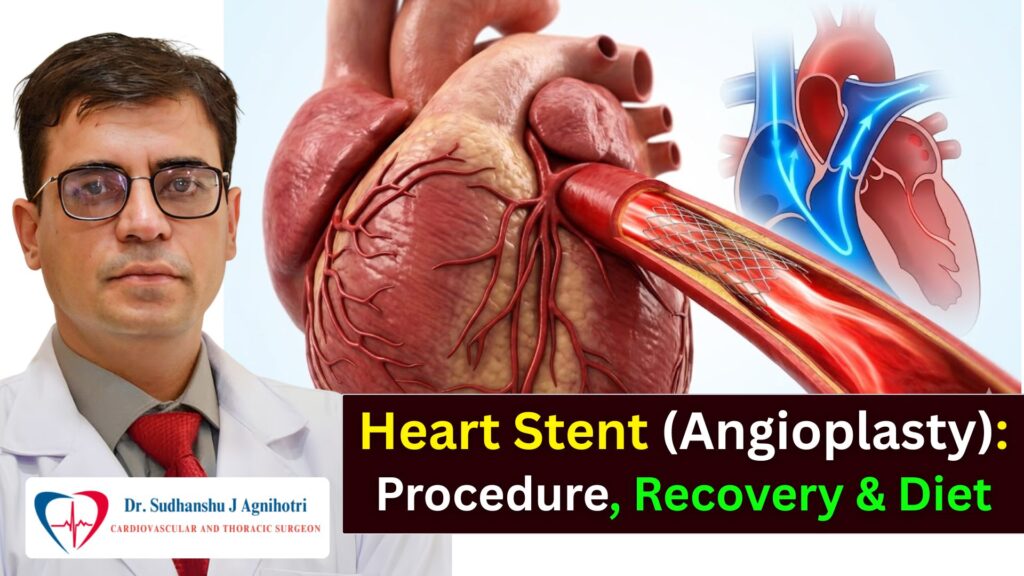
Heart Stent (Angioplasty): Procedure, Recovery & Diet Guide
Heart problems are becoming increasingly common due to stress, unhealthy diets, and sedentary lifestyles. One of the most effective treatments for blocked heart arteries is angioplasty with stent placement. If you or your loved one has been advised this procedure, it’s natural to have many questions.
In this guide, we answer the most commonly asked questions about heart stents—covering the procedure, recovery, risks, and lifestyle changes.
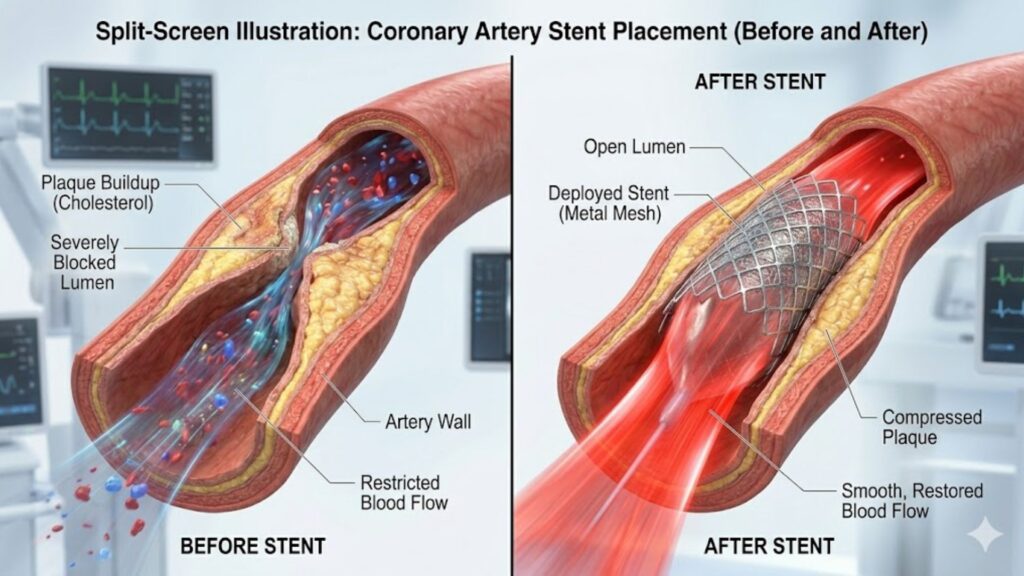
What is Stent Placement?
A heart stent is a small, mesh-like metal tube that is placed inside a blocked or narrowed artery to keep it open. It helps restore proper blood flow to the heart and reduces the risk of heart attacks.
Stent placement is commonly done during a procedure called angioplasty.
Is Stent Placement Considered a Surgery?
Technically, heart stent placement is not an open-heart surgery. It is a minimally invasive procedure.
- No large cuts are made
- A thin tube (catheter) is inserted through the wrist or groin
- Recovery time is much faster than traditional surgery
This makes it a safer and preferred option for many patients.
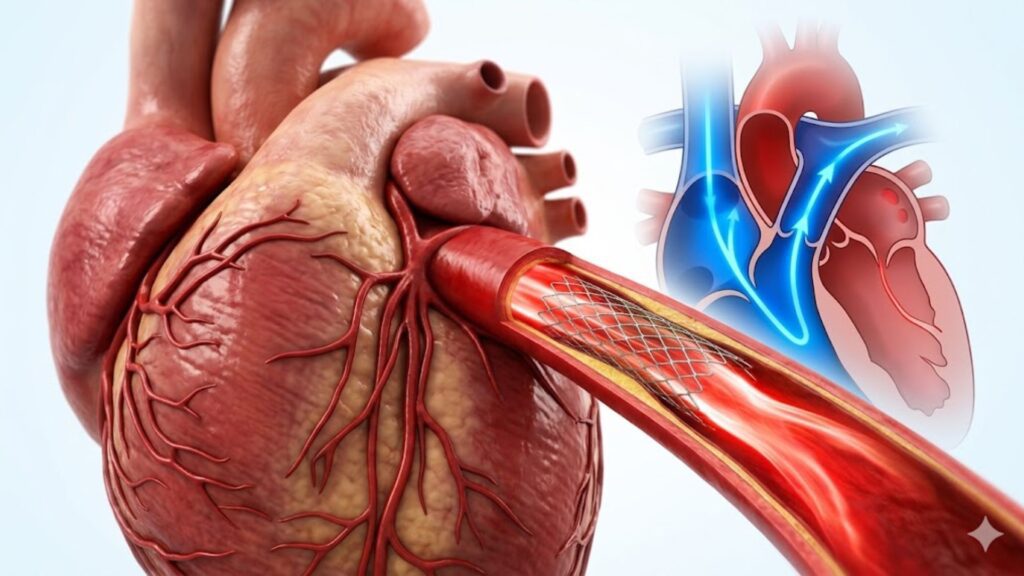
What is the Procedure for Stent Placement?
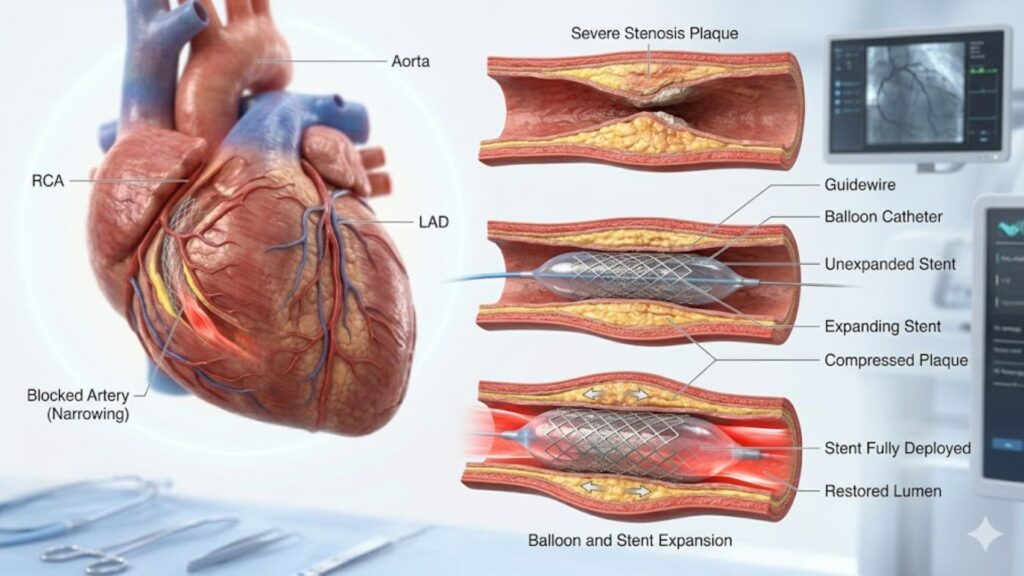
The angioplasty procedure usually follows these steps:
- A catheter is inserted into a blood vessel (wrist or groin)
- It is guided to the blocked artery
- A small balloon is inflated to open the blockage
- A stent is placed to keep the artery open permanently
The procedure typically takes 30 minutes to 2 hours, depending on the complexity.
What is Bile Duct Stent Placement?
While heart stents are used in coronary arteries, bile duct stents are used in the digestive system to keep bile ducts open. This is a completely different procedure and is usually performed for liver or gallbladder-related conditions.

How Long Does Pain Last After Stent Placement?
Most patients experience mild discomfort at the catheter insertion site for a few days.
- Slight swelling or bruising is normal
- Pain usually subsides within 2–5 days
- Severe or persistent pain should be reported to a doctor
Is Atrial Fibrillation (AFib) Common After Stent Placement?
Atrial fibrillation (AFib) is not very common after heart stent placement, but it can occur in some patients, especially those with pre-existing heart conditions.
If symptoms like irregular heartbeat, dizziness, or fatigue appear, immediate medical consultation is necessary.

What Should One Eat After Getting a Stent?
Diet plays a crucial role in recovery and long-term heart health.
Recommended Foods:
- Fresh fruits and vegetables
- Whole grains
- Nuts and seeds
- Healthy oils like mustard oil and olive oil
- Lean protein (fish, pulses)
Foods to Avoid:
- Fried and oily food
- Packaged and processed items
- Excess salt and sugar
- Cold drinks and sugary beverages
A heart-healthy diet helps prevent future blockages.
How to Sleep Comfortably After Stent Placement?
Sleeping position can impact recovery, especially in the first few days:
- Avoid putting pressure on the catheter site
- Sleep on your back or opposite side
- Use a comfortable pillow for support
- Avoid sudden movements
Proper rest helps faster healing.
How Long Does It Take to Recover After Stent Placement?
Recovery is usually quick compared to major surgeries:
- Hospital stay: 1–2 days
- Light activities: within a few days
- Full recovery: 1–2 weeks
However, lifestyle changes must continue lifelong.
What Are the Risks or Complications of Stent Placement?
Although angioplasty is safe, some risks may include:
- Bleeding at the insertion site
- Blood clot formation
- Re-narrowing of the artery (rare)
- Infection (very rare)
Choosing an experienced cardiac specialist significantly reduces risks.

Can a Person Live a Normal Life After a Stent?
Yes, absolutely. Most patients return to a normal and active life after heart stent placement.
However, long-term success depends on:
- Healthy diet
- Regular exercise
- Medication adherence
- Routine check-ups
Ignoring lifestyle changes can lead to future complications.
Expert Care Matters
When it comes to heart procedures, choosing the right doctor is critical.
Dr. Sudhanshu J. Agnihotri, known as the Best Cardiac Surgeon in Indore, has extensive experience in performing advanced heart procedures including angioplasty and stent placement. His patient-centric approach, accurate diagnosis, and modern treatment techniques ensure safe and effective outcomes.
If you or your loved one is experiencing chest pain or has been advised angioplasty, timely consultation can save lives.
Conclusion
Heart stent placement (angioplasty) is a safe and effective procedure that restores blood flow and prevents heart attacks. With proper care, diet, and medical guidance, patients can lead a healthy and active life.
If you have symptoms like chest pain, breathlessness, or fatigue, do not ignore them—early diagnosis and expert treatment can make all the difference.